Have you ever noticed condensation on your windows in the morning, a musty smell in a bedroom or stuffy air inside your workplace? These issues can indicate that your property needs better airflow or moisture management.
Indoor comfort is about more than heating and cooling. The quality of the air circulating through your home or business also matters. Without suitable ventilation, moisture, odours and indoor pollutants can accumulate, potentially contributing to condensation, mould growth and an uncomfortable indoor environment.
This is why more property owners are considering professionally designed ventilation systems Auckland residents and businesses can use to improve indoor airflow and manage moisture.
Whether you want to make your home feel fresher or create a more comfortable commercial environment, understanding your ventilation and air conditioning options can help you make a better-informed decision.
In this guide, we explain how ventilation systems work, the benefits of home ventilation Auckland properties may need, and how ventilation can complement commercial air conditioning Auckland businesses use throughout the year.
Why Is Indoor Ventilation Important?
Modern homes and commercial buildings are often designed to retain heat and improve energy efficiency. While insulation and draught reduction can help maintain indoor temperatures, they do not eliminate the need for fresh air.
Everyday activities introduce moisture and pollutants into indoor spaces.
Cooking, showering, drying clothes indoors and even breathing contribute to indoor moisture. Cleaning products, furnishings and everyday activities can also release substances into the air.
Without adequate ventilation and moisture management, these factors may contribute to:
- Condensation on windows and other cold surfaces.
- Persistent musty smells.
- Excess indoor humidity.
- Conditions that encourage mould growth.
- Stuffy or uncomfortable indoor air.
- Reduced comfort in frequently occupied spaces.
A suitable ventilation system helps manage indoor air by introducing fresh air, exhausting stale air or using a combination of air movement and filtration, depending on the system.
However, ventilation is not a substitute for fixing leaks, addressing building defects or removing significant sources of moisture.
For property owners in Auckland, the right solution depends on the building’s design, occupancy, moisture sources and existing ventilation.
What Are Ventilation Systems, and How Do They Work?
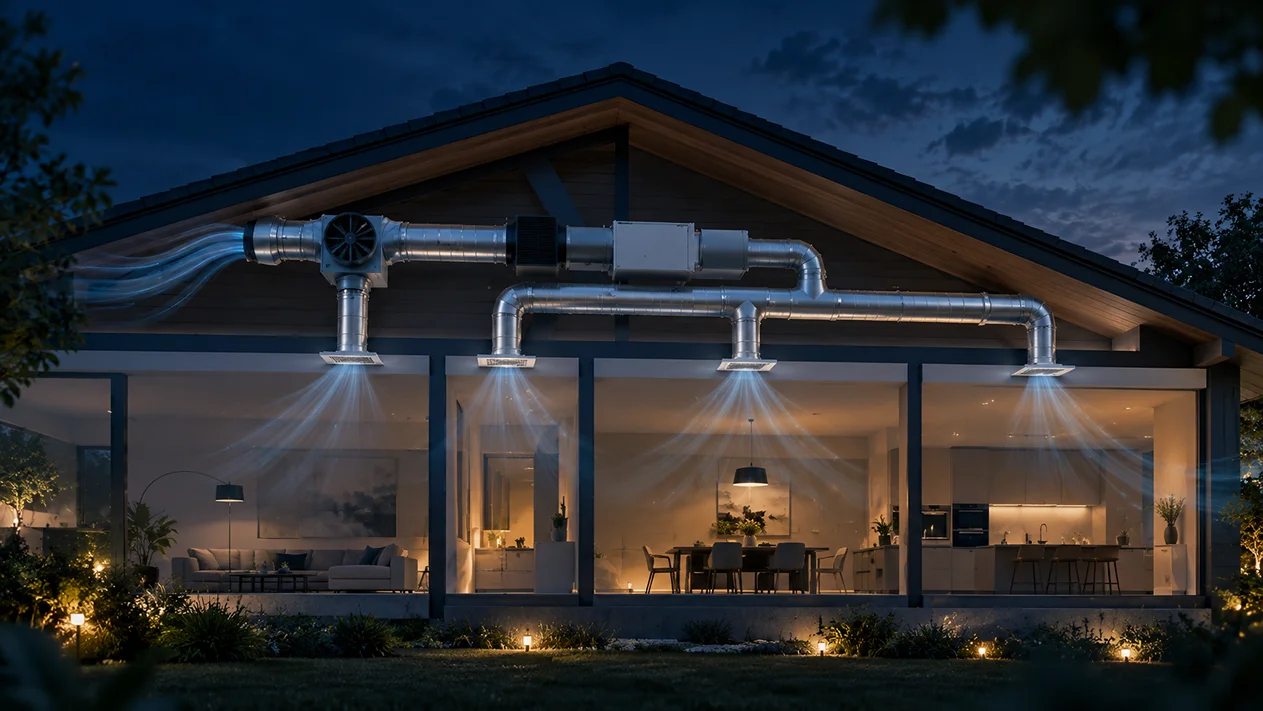
Ventilation systems are designed to help move air through a building and manage the exchange between indoor and outdoor air.
Different systems achieve this in different ways.
1. Mechanical Ventilation Systems
Mechanical ventilation uses fans and associated equipment to move air through a property.
Depending on the design, a system may supply fresh outdoor air, extract indoor air or combine both functions.
Mechanical ventilation can be useful in rooms where natural airflow is limited or where moisture and odours need to be managed more effectively.
2. Balanced Ventilation Systems
Balanced ventilation systems are designed to supply fresh air and extract stale air in a coordinated way.
Some systems include heat recovery, which transfers heat between outgoing and incoming air streams without intentionally mixing them.
This can help reduce the heating or cooling penalty associated with ventilation, depending on the equipment, climate and operating conditions.
The suitability of a balanced system depends on the property, installation requirements and the level of ventilation needed.
3. Extractor Fans
Extractor fans remove air from specific areas, such as bathrooms, kitchens and laundries.
They are particularly useful for removing moisture and odours near their source.
For example, an appropriately sized bathroom extractor fan can help remove humid air generated by showering, provided it is installed and operated correctly and has a suitable discharge route.
However, extracting air from one room does not necessarily provide a complete ventilation solution for the entire house.
4. Heat Recovery Ventilation
Heat recovery ventilation systems transfer some heat from outgoing air to incoming air.
In cooler weather, this can help retain some of the heat that would otherwise be lost during ventilation.
Actual performance depends on the system design, airflow rates, installation quality and operating conditions.
When considering ventilation systems in Auckland, it is worth discussing whether a standard extraction system, a balanced system or a heat recovery option is most suitable for your property.
Explore the ventilation services offered by Auckland Air Solutions to learn more about available solutions.
Home Ventilation in Auckland: Signs Your Property May Need Better Airflow
Auckland’s weather can be humid, and indoor moisture can become a concern when ventilation is inadequate or moisture sources are not controlled.
If you are considering home ventilation Auckland solutions, look for patterns that suggest your current setup may not be managing indoor air effectively.
Persistent Window Condensation
Some condensation can occur when warm, moist indoor air meets cold window surfaces.
Occasional condensation does not automatically mean you need a whole-house ventilation system. However, persistent or widespread condensation may indicate that indoor humidity, ventilation or surface temperatures need attention.
If condensation continues despite sensible ventilation and moisture management, consider a professional assessment.
Musty Smells
A persistent musty smell may indicate damp materials, concealed moisture or mould.
Ventilation can help manage indoor moisture, but it will not resolve an active plumbing leak or repair water-damaged building materials.
Investigate the source rather than relying on air movement or fragrance to mask the smell.
Rooms That Feel Stuffy
Bedrooms, living areas and home offices can become uncomfortable when fresh-air supply is inadequate.
Opening windows can help when outdoor conditions are suitable, but natural ventilation may not be practical throughout the year or in every room.
A properly designed mechanical ventilation system may provide a more consistent approach.
Moisture from Everyday Activities
Cooking, showering and drying clothes indoors can introduce significant amounts of moisture into a home.
Using extractor fans where appropriate, covering pots while cooking and venting moisture outdoors can help reduce the amount of humidity entering other rooms.
Where these measures are insufficient, a ventilation assessment can help identify additional options.
Mould Returning After Cleaning
Mould can return when the conditions that support its growth remain unchanged.
Cleaning affected surfaces may be necessary, but the underlying moisture source must also be addressed.
That may involve improving ventilation, repairing leaks, managing indoor humidity or correcting a building defect.
For extensive mould, recurring dampness or concerns about concealed moisture, seek appropriate professional advice.
Benefits of Installing a Home Ventilation System
A well-designed home ventilation system can support a more comfortable indoor environment when it is matched to the property’s requirements.
1. Better Moisture Management
Ventilation can help remove moisture generated by everyday activities.
When combined with effective extraction, suitable heating and repairs to moisture sources, it can help reduce conditions that encourage condensation and mould growth.
The results depend on the system, the building and how moisture enters the property.
2. Fresher Indoor Air
Ventilation helps replace stale indoor air with fresh outdoor air.
Depending on the system, filtration may also help remove some airborne particles from the incoming air.
The effectiveness of filtration varies by filter type, system design and maintenance.
3. More Comfortable Bedrooms and Living Areas
Stuffy rooms can make it harder to feel comfortable, particularly when several people occupy a space for extended periods.
A suitable ventilation system can help maintain better air exchange in regularly occupied areas.
Ventilation should be designed alongside the property’s heating and cooling requirements to avoid creating unnecessary discomfort.
4. Support for Building Maintenance
Persistent moisture can damage paint, furnishings and building materials over time.
Managing moisture at its source and providing appropriate ventilation can help reduce the risk of moisture-related damage.
Ventilation alone cannot guarantee a mould-free home, but it can form an important part of a wider moisture-management strategy.
5. A More Complete Indoor Comfort Solution
Heating and cooling systems regulate indoor temperature, while ventilation manages the movement and exchange of air.
These functions complement each other, but they are not interchangeable.
A heat pump may warm a room effectively without bringing in outdoor air. Similarly, an extractor fan may remove moisture without providing heating or cooling.
For this reason, some properties benefit from considering ventilation and climate control together.
Ventilation vs Air Conditioning: What Is the Difference?
Ventilation and air conditioning are sometimes confused because both affect the indoor environment. However, they serve different purposes.
Ventilation
Ventilation manages the exchange of indoor and outdoor air.
Depending on the system, it can help remove stale air, introduce fresh air and manage moisture generated inside the building.
Air Conditioning
Air conditioning primarily controls indoor temperature. Many systems also remove some moisture from the air during cooling, depending on operating conditions.
However, a typical split-system air conditioner recirculates indoor air rather than supplying a continuous flow of outdoor fresh air.
Can You Use Both Systems Together?
Yes. In many properties, ventilation and air conditioning perform complementary roles.
For example, a home might use a heat pump for heating and cooling and a separate ventilation system to manage indoor air exchange.
A business might use commercial air conditioning alongside a mechanical ventilation system designed for its occupancy and activities.
The appropriate arrangement depends on the building, the number of occupants, indoor air requirements and applicable building regulations.
Commercial Air Conditioning in Auckland: Why Businesses Need the Right Solution
Homes and commercial buildings have different heating, cooling and ventilation requirements.
A busy office, retail store, restaurant or other commercial premises may have changing occupancy levels, equipment-generated heat and different air-quality requirements from a typical household.
This is why businesses researching commercial air conditioning Auckland services should consider the entire indoor environment rather than choosing equipment based only on floor area.
Offices and Workplaces
Offices need comfortable conditions for employees, visitors and customers.
Temperature control, suitable ventilation and appropriate air distribution can contribute to a more comfortable working environment.
The system design should consider occupancy, meeting rooms, heat from computers and other equipment, and the building’s layout.
Retail and Customer-Facing Spaces
Retail premises may experience fluctuating occupancy and heat loads throughout the day.
A suitable commercial air conditioning system can help maintain comfortable conditions for staff and customers.
Equipment selection should account for the size and layout of the premises, operating hours and expected usage.
Restaurants and Food-Service Businesses
Restaurants and commercial kitchens have specific ventilation needs.
Cooking can generate substantial heat, moisture, odours and airborne contaminants. Kitchen extraction and make-up air must be designed appropriately for the equipment and applicable requirements.
General air conditioning should not be treated as a replacement for required kitchen extraction.
Businesses should consult suitably qualified professionals to design systems that meet their operational and regulatory needs.
Larger Commercial Premises
Larger premises may require multiple air conditioning units, ducted systems, zoning or a more specialised HVAC design.
A professional assessment can help determine the required heating and cooling capacity, air distribution and control strategy.
Auckland Air Solutions provides HVAC services for residential and commercial spaces. Businesses should discuss the specific requirements of their premises before selecting equipment.
How to Choose the Right Ventilation System in Auckland
With several system types available, choosing the right solution starts with understanding the problem you want to solve.
Assess the Source of Moisture
Identify whether condensation or dampness is associated with cooking, showering, indoor clothes drying, poor airflow, leaks or another cause.
Addressing the source helps ensure that the proposed solution targets the actual issue.
Consider the Size and Layout of Your Property
The number of rooms, ceiling height, existing ventilation and available installation space all affect the design.
A system suitable for a compact apartment may not meet the requirements of a large family home or commercial building.
Think About Noise and Operating Costs
Ask about expected operating noise, filter replacement, maintenance and energy consumption.
Equipment should be selected for its intended use and installed according to the manufacturer’s requirements.
Check Filtration and Maintenance Requirements
If filtration is important to your needs, ask what type of filter the system uses and which particles it is designed to capture.
Find out how often filters need attention and whether replacement filters are readily available.
Choose Professional Installation
A professional assessment helps determine the appropriate system type, airflow requirements and installation method.
Correct installation and commissioning are important for ensuring the system operates as intended.
Why Choose Auckland Air Solutions for Ventilation and HVAC?
Selecting an appropriate ventilation or air conditioning system is easier when you understand how the options fit your property.
Auckland Air Solutions provides heating, cooling and ventilation services for residential and commercial properties across Auckland.
Whether you are dealing with persistent condensation at home, planning a new ventilation installation or reviewing the climate control requirements of a workplace, the team can help you explore suitable options.
The company’s services include ventilation, heat pumps, ducted systems and maintenance, allowing property owners to consider different aspects of indoor comfort.
To discuss your requirements, visit the Auckland Air Solutions ventilation service page or explore the company’s complete range of HVAC services.
Improve Your Indoor Environment with Auckland Air Solutions
A comfortable indoor environment requires more than maintaining the right temperature. Proper ventilation can help manage indoor moisture, improve air exchange and support a more pleasant space for everyday living and working.
Whether you are exploring ventilation systems Auckland homeowners can use, researching home ventilation Auckland solutions or comparing commercial air conditioning Auckland services, the first step is understanding your property’s requirements.
The right system should address the actual problem, suit your building and be professionally installed and maintained.
Ready to improve your property’s indoor comfort? Contact Auckland Air Solutions on 0800 110 120 to discuss ventilation and HVAC options for your home or business.